What a package room does well
Package rooms centralize deliveries and can work well for buildings with enough back-of-house space. They are especially useful when deliveries are a logistics issue rather than an amenity opportunity.
What an convenience hub adds
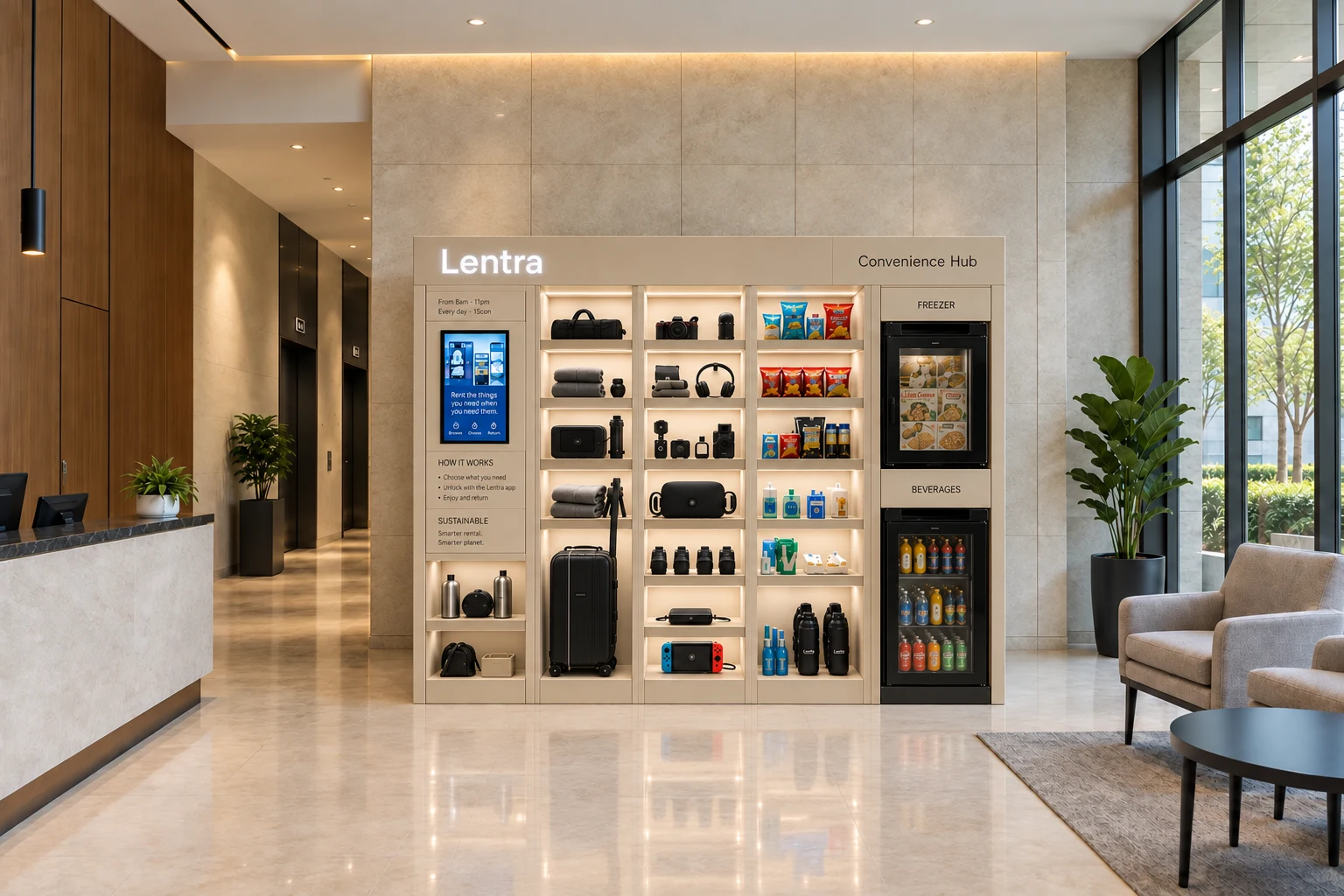
Lentra uses a visible, resident-facing footprint to offer useful things already inside the building. The app connects access and the operating model covers the work that keeps the offering functional and current.
Compare security and access
Package rooms need a clear policy for carrier entry, resident collection, visitor access and exceptions such as oversized or perishable deliveries. An convenience hub has a different chain of access: known inventory, resident authentication, payment or reservation, and a logged compartment opening. Evaluate each against its actual risk rather than treating all lockers as interchangeable.
Compare space and staff time
A package room can absorb changing delivery volume but may require overflow space and exception handling. A managed amenity uses a defined footprint and should assign restocking and support away from the building team. Measure both the square metres occupied and the recurring staff tasks created.
How to decide
Ask whether the project is trying to reduce package congestion, improve the resident offer, or both. A clear answer avoids forcing a package room to behave like a retail and rental service, or expecting an convenience hub to solve carrier logistics.