Residential
Premium rentals and round-the-clock essentials for recurring needs close to home.
Buildings and operators we work with
Rents rose 30% while renter incomes rose 9%. Half of renter households are cost-burdened. For the hardest-pressed, the money left after rent has fallen to a record low of $210 a month, and that is everything that is not rent.
Which is why an amenity carrying its own monthly fee gets declined, and quietly resented. Ours has none: residents pay for the hours they use something and nothing when they do not.
Joint Center for Housing Studies, Harvard: America's Rental Housing 2026, on 2024 data.
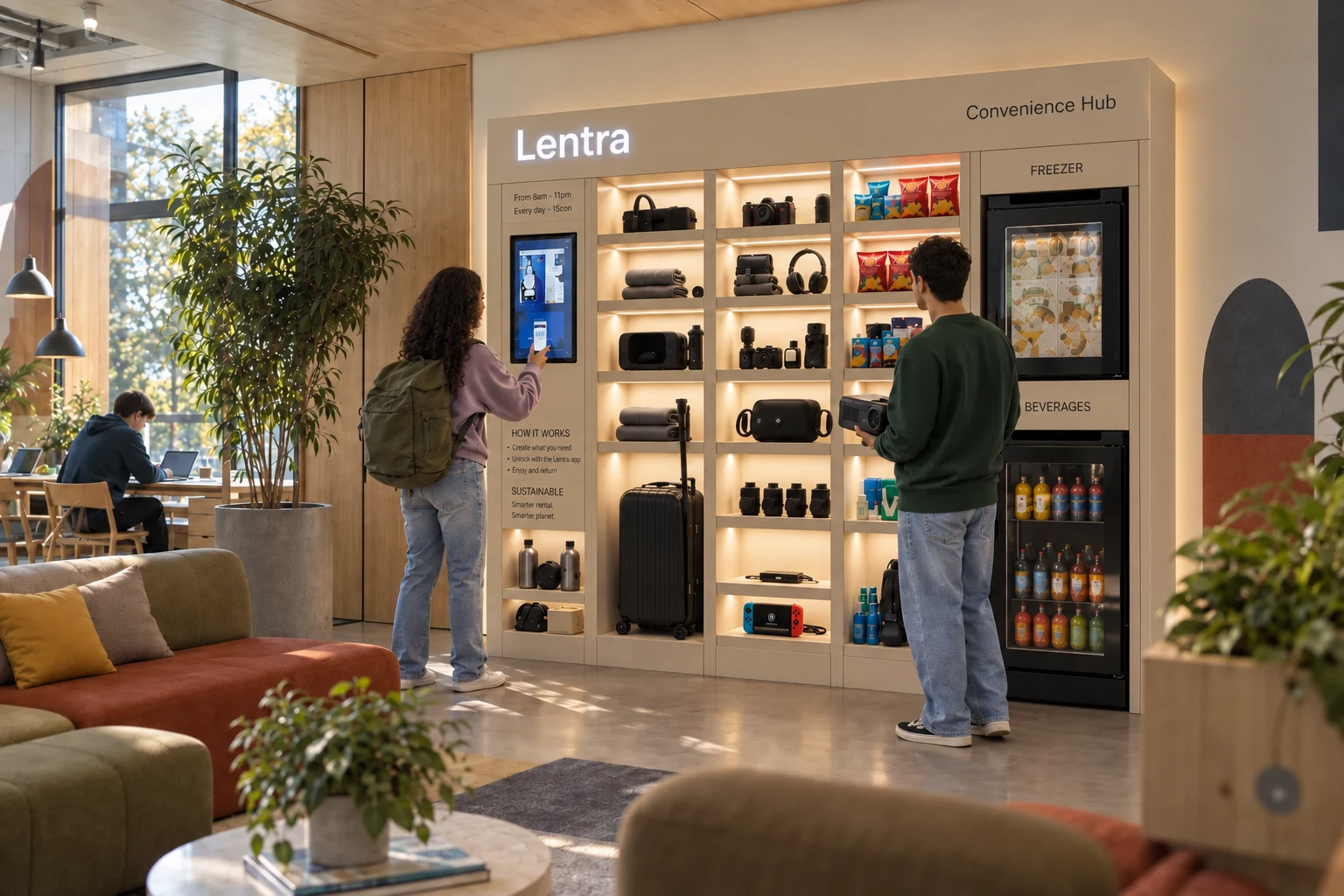
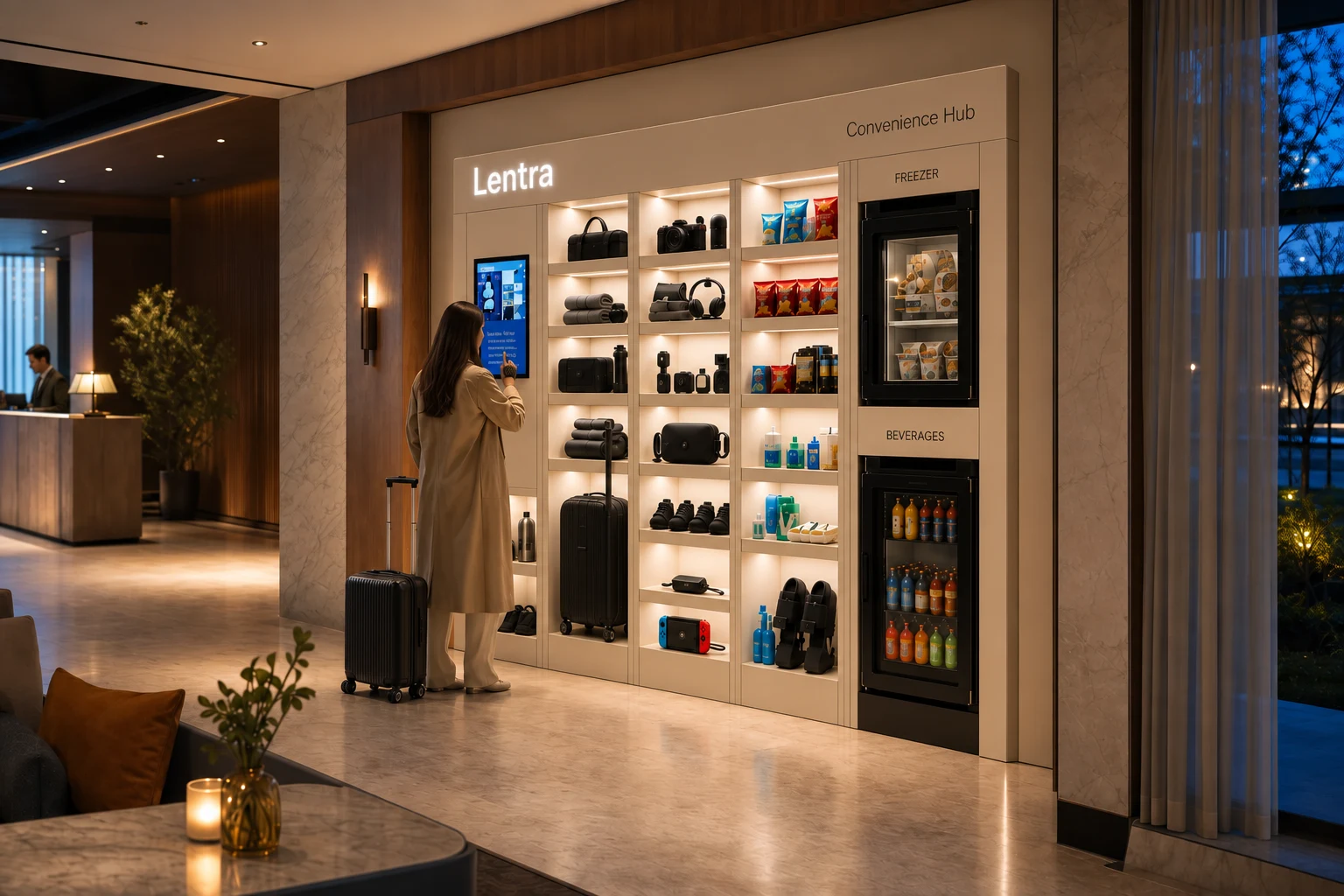
The footprint, the product mix and the operating model are planned around the people who live, study, work or stay in the building.
 Resident
My locker won't open. How do I get help?
Start with a core selection, then let the building tell you what it actually needs. Nothing about the offer is fixed on day one.
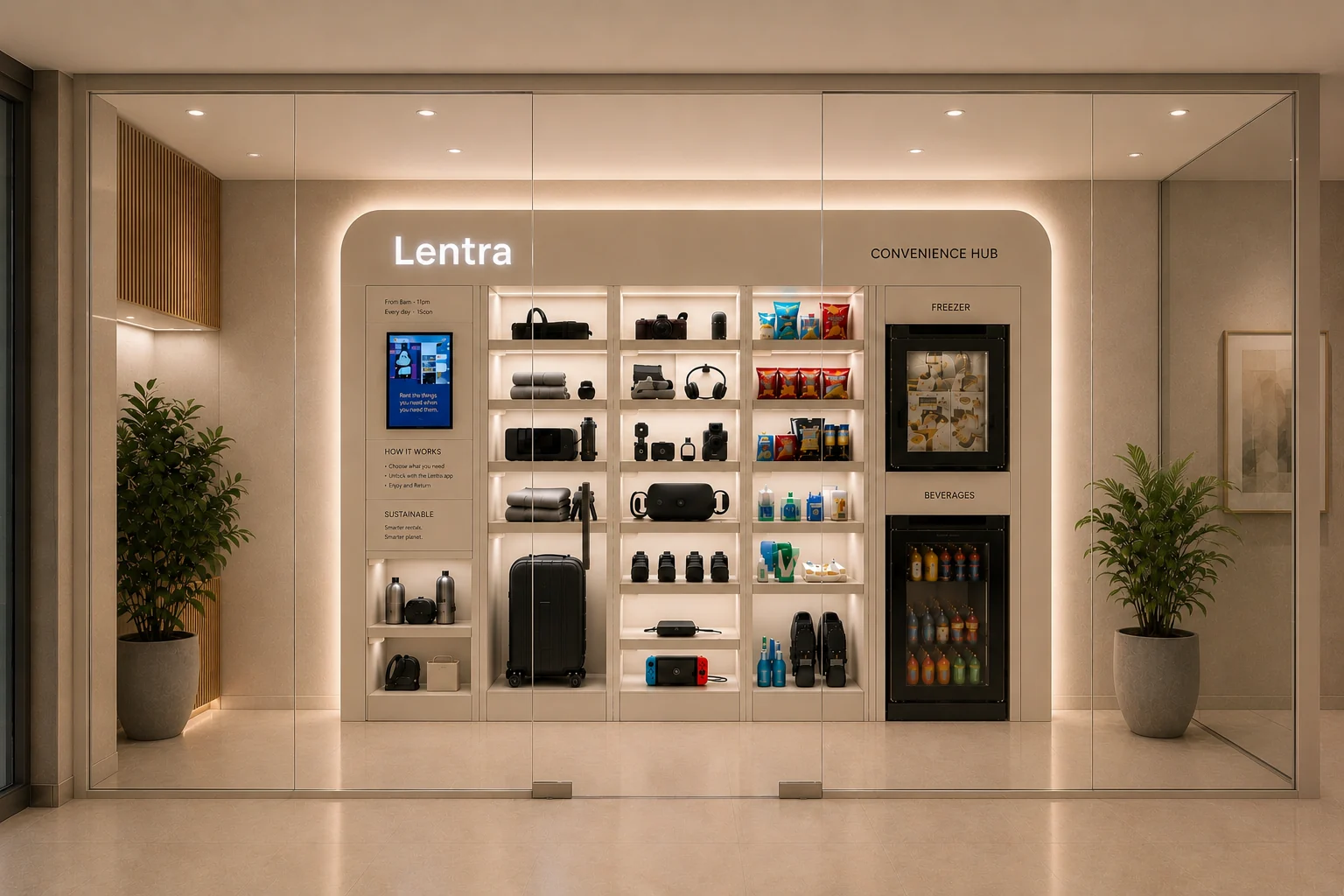
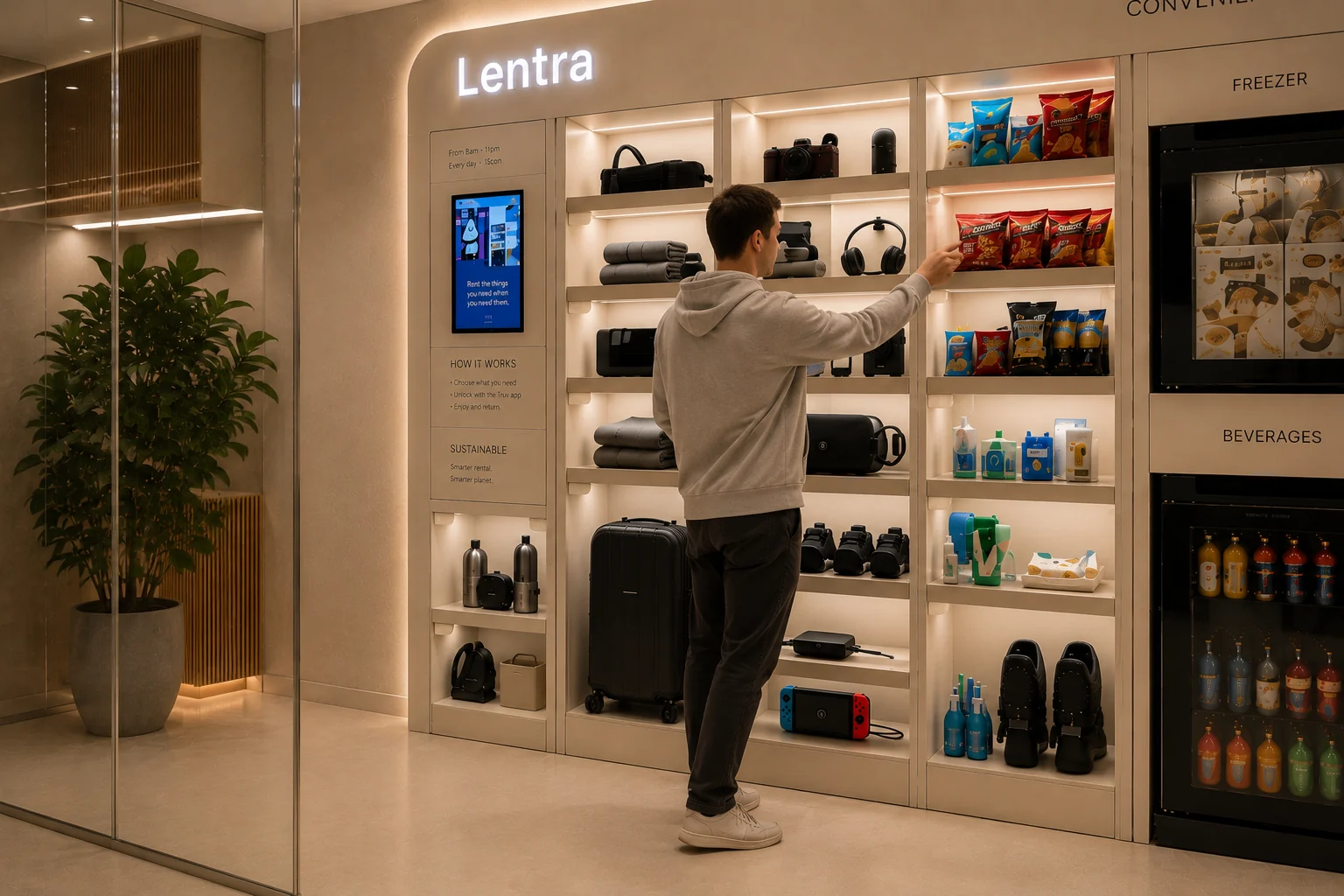
Your hub is made to the configuration agreed in the proposal, then fitted in a single visit. Residents arrive to a lobby that was a building site for one morning, not one quarter.
The build clock starts once the configuration and site survey are signed off. Your proposal sets the dates against sourcing and site readiness.
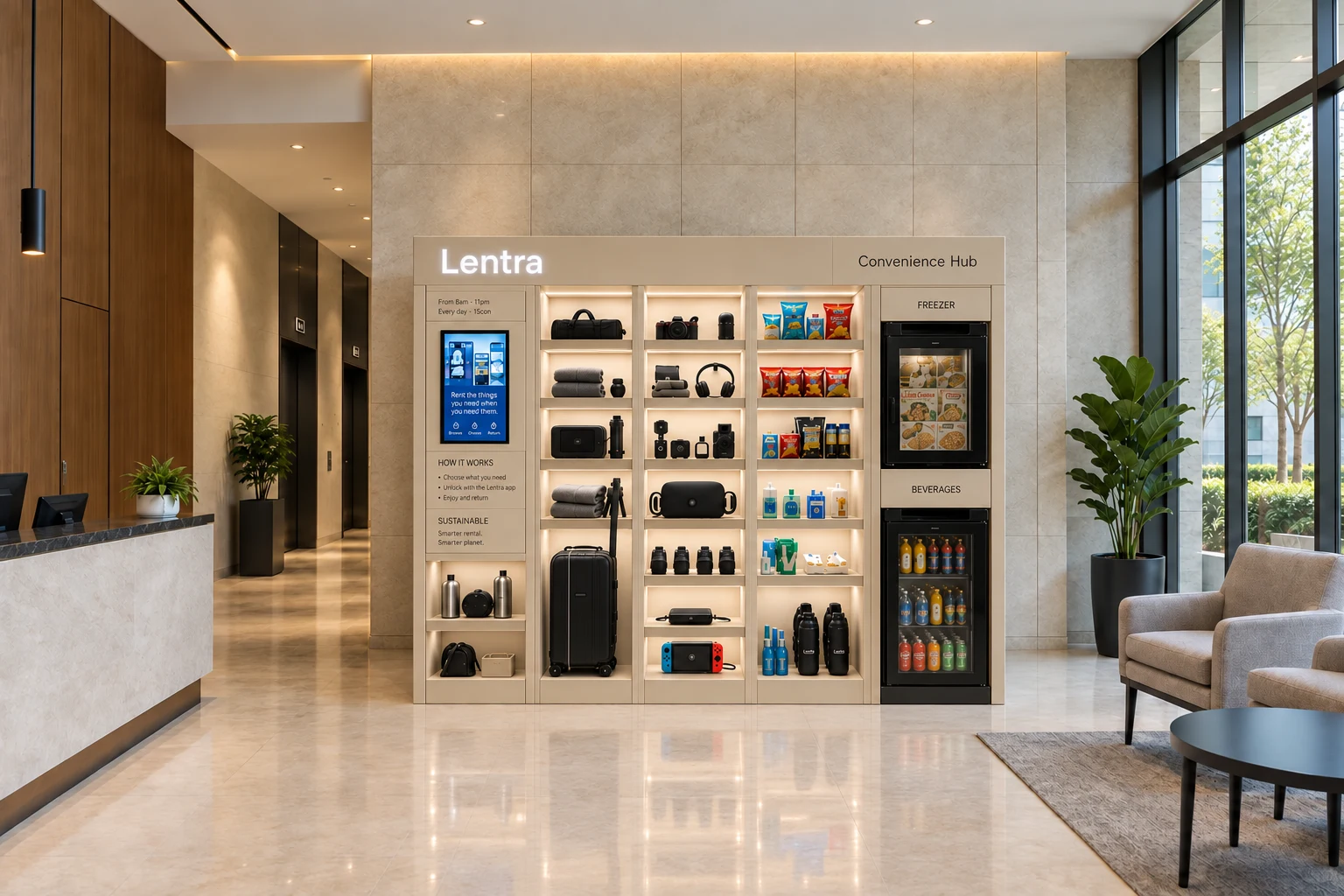
Most buildings compete on the same list: gym, lounge, roof terrace, parcel room. A designed convenience hub in the lobby is the one thing a prospect has not already seen three times that day.
A managed, revenue-aware hub is an improvement to the asset rather than another recurring cost line, and it competes in the same conversation as the gym and the roof terrace on a fraction of the floor area.
Prospects tour several properties in a day and remember the differences, not the similarities. The building with a lit, branded convenience hub in the lobby is the one they describe to someone else that evening.
People recommend buildings for the things that made daily life easier. A hub residents use every week is a far more repeatable story than one they only saw at the viewing.
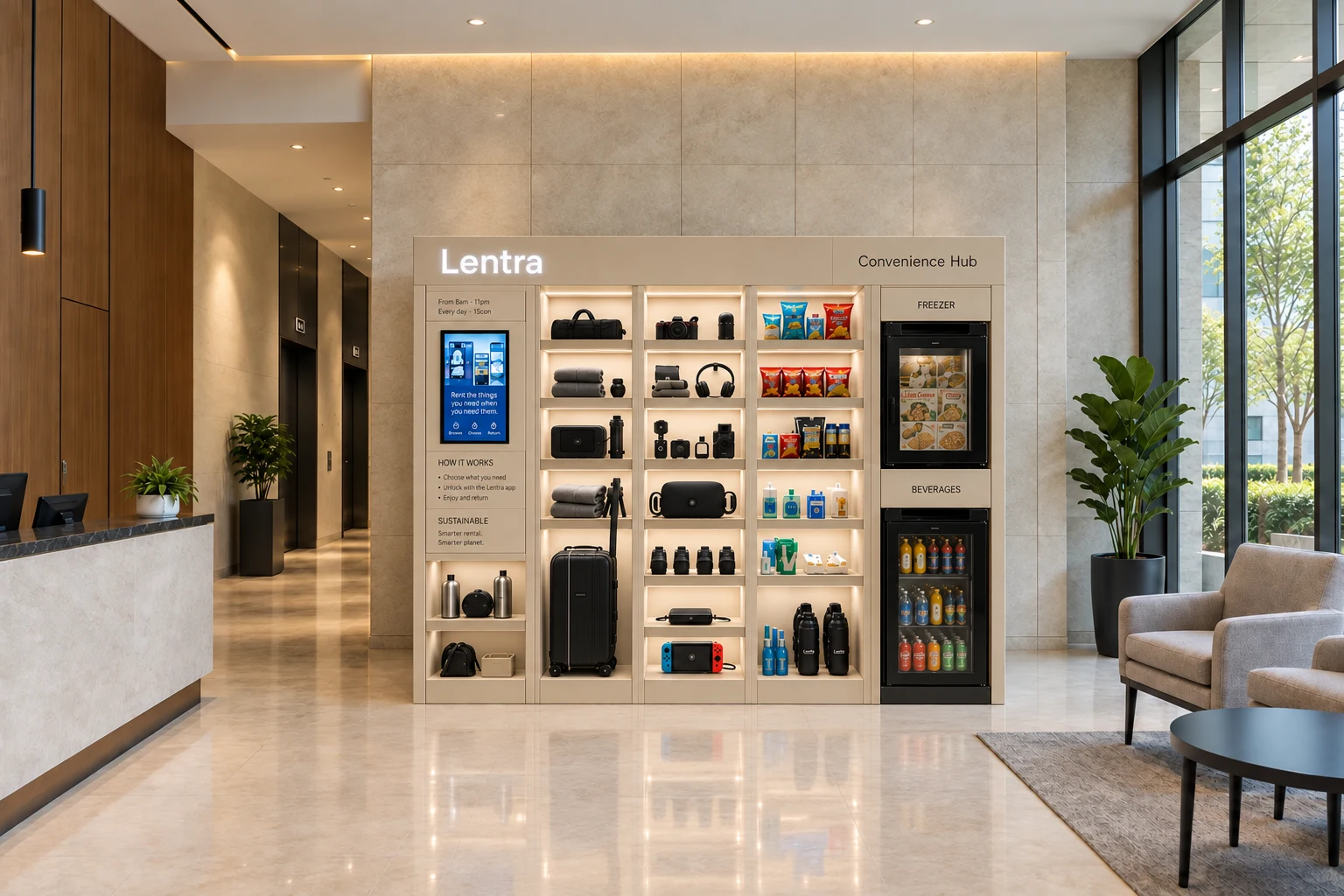
Guests, brokers and investors walk past it on the way in. A considered piece of lobby design reads immediately as a building that is run with intent.
Positioning effects like the four above are qualitative by nature. Lentra's software learns from real usage in your building and reports what can actually be counted (usage, availability, support requests and resident feedback), then suggests adjustments to the offering: supplying what is in demand, retiring what is not, and recommending new items before residents ask.
Convenience is asymmetric. Adding it is pleasant. Taking it away is not. A resident who has spent a year borrowing what they need from the lobby has quietly stopped buying things they only use twice, stopped storing them and stopped planning a Saturday around one errand.
When they look at another building, the comparison is no longer feature against feature. It is their current normal against going back to the way things were, and going back reads as a downgrade even when the rent is lower.
Why nobody gives it backA traditional amenity is a capital project: you buy the room, the equipment and the upkeep, then hope it gets used. Lentra is funded, installed, stocked and operated by us, then reviewed against what residents actually use.
Tell us what your residents need. We'll design the hub, model the operating options and set out a building-specific implementation plan.