The amenities residents actually use
The interesting thing about a convenience hub is not the day it opens. It is the day a resident realises they no longer own a drill, and have no intention of buying one.
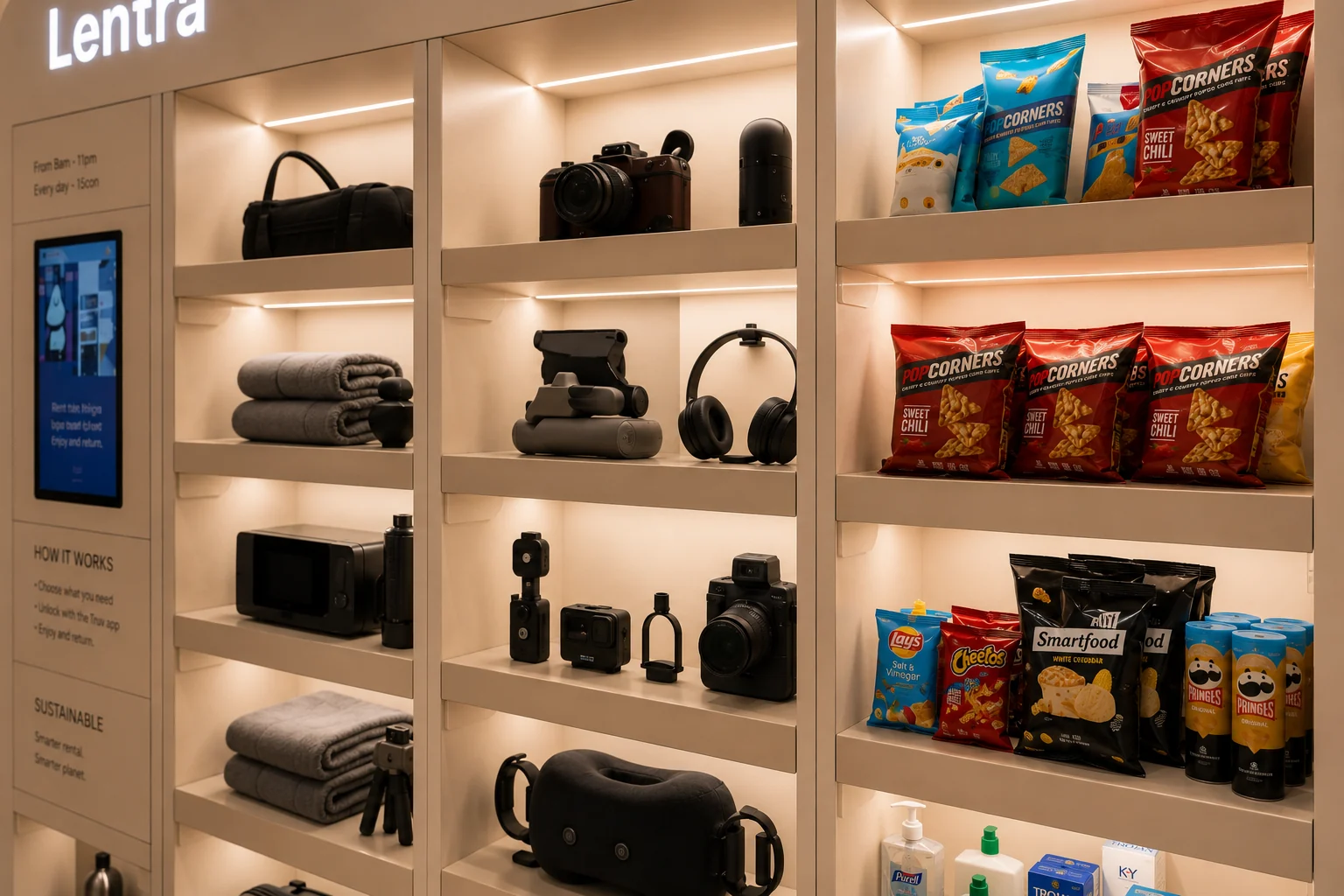
There is a reliable sequence to how a convenience hub lands in a building, and it has very little to do with the launch.
Seeing it, then having it
First someone walks past it and understands it without being told. The lit band, the compartments, the screen. It explains itself, which is why the reaction at a viewing tends to be curiosity rather than a polite nod.
Then they use it once, usually for something small and slightly urgent. A charger. Detergent. An iron the night before an interview. That first use is the one that matters, because it replaces an errand that would otherwise have cost them an hour and a journey.
Then the behaviour changes, quietly and without anyone deciding to change it. They stop buying the thing they only need twice a year. They stop keeping a spare of everything in a cupboard. They stop planning a Saturday around one errand. Their baseline moves.
And a moved baseline does not move back. Going to a shop to buy something you used to borrow in forty seconds does not feel neutral once you have lived the other way. It feels like a step backwards, and people are notably reluctant to take those.
Why this is an operator's argument, not just a resident's
Most amenities are evaluated on whether they help close a lease. This one does something different, and slower, and worth more: it changes what the resident is comparing when their lease comes up.
A building with a longer feature list gets matched by a competitor within a cycle. A resident who has reorganised their week around not owning things they do not need is comparing their current normal against reverting to the old one. That is a much harder comparison for a competing building to win, and it is not one that can be copied by adding another feature.
Access to better things, for a fraction of owning them
There is a second effect that residents notice faster than operators expect.
When you are stocking a shared hub rather than asking every household to buy their own, the economics of quality invert. It stops making sense to stock the cheapest version of anything. A good vacuum, a proper steamer, a decent set of tools, a piece of luggage that survives the trip: buying one of each for a building is trivial next to a hundred households each buying a mediocre one. Residents get the version they would not have bought for themselves, for the price of a short rental, always charged and always ready.
That is the part people describe to their friends. Not that the building has lockers, but that they used something genuinely good and did not have to own it, store it, or maintain it.
The selection is not fixed, and should not be
A hub stocked from a standard list is a hub that is wrong for most buildings and getting wronger every month. Students, hotel guests, office tenants and long stay residents reach for different things, and the same building's mix drifts as the people in it change.
So the selection is treated as something that is learned rather than decided. The software reads what is actually used, what is reserved and never collected, what gets requested and is not there, and what has sat untouched for a quarter. That produces a running recommendation: stock more of this, retire that, add this thing residents keep asking for. Curation stops being a launch decision and becomes an operating habit.
One honest limit on that. What the system learns is usage and requests, and both are real and countable. It does not know why someone stopped borrowing the steamer, and it will not pretend to. The reporting stays on the side of what can actually be counted.
What it looks like when it has worked
Not a busy launch week. A resident, eighteen months in, who cannot tell you the last time they bought something they only needed once, and who would notice immediately if it disappeared.
Give your residents a new normal
We design the hub, stock it for your building and keep the selection honest against real usage.