Where micro markets work well
A micro market can be the right answer when the building’s biggest gap is convenient food, drinks and daily essentials. It is a retail solution and should be evaluated on assortment, restocking and resident demand.
What Lentra adds
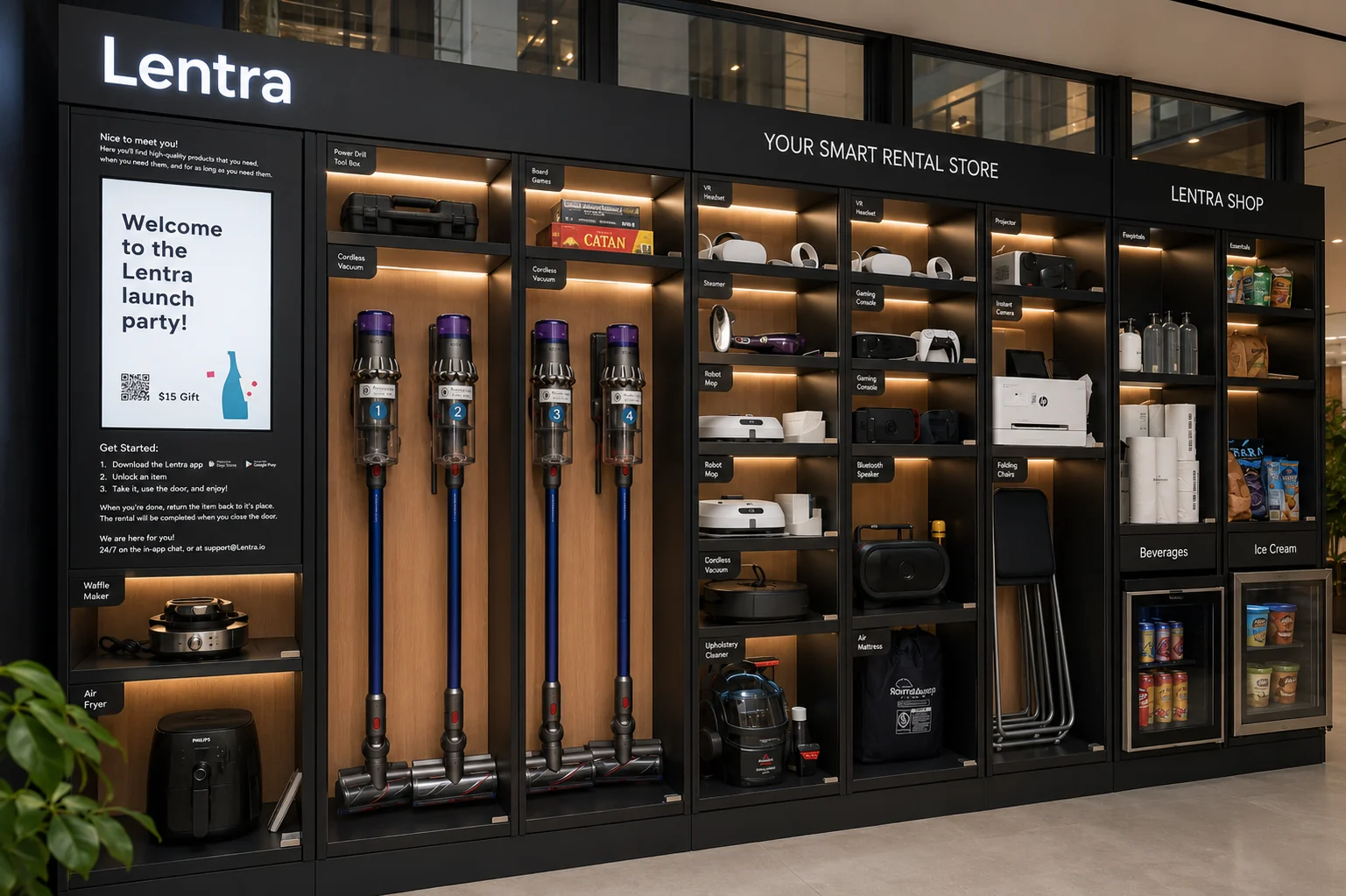
Lentra includes a 24/7 shop but also addresses needs that do not fit a retail shelf: borrowing household equipment, entertainment or tools for a short period. That wider range can make the amenity useful across more resident moments.
Compare assortment and waste
A retail-first operation succeeds when product turnover supports freshness, replenishment and the available footprint. A mixed amenity allocates less space to consumables and more to durable items that residents borrow repeatedly. Ask how demand is forecast, how unavailable products are handled and who bears shrinkage or expired-stock risk.
Compare the resident journey
Micro markets usually optimize browsing and checkout. Lentra adds reservation, timed rental, compartment access, returns and product suggestions. The wider journey can serve more needs, but it also requires software and support designed for reusable inventory rather than retail alone.
The question to ask
If the property wants a retail corner, a micro market may be the clearest category. If it wants an amenity that also provides rentals, app access and an adaptable catalog, Lentra may fit the brief better. The best answer is based on actual resident needs, not a category label.