Start with resident utility
Usage is the foundation of ROI. Look for real moments of convenience: a resident needs a cleaning tool, an everyday item, a printer or something for the weekend. A service that fits those moments is more valuable than a feature list that merely looks impressive on a tour.
Include property-level outcomes
For operators and developers, the return may combine direct income with softer but important outcomes: stronger differentiation on tours, a more complete resident experience, less staff involvement and a more compelling reason to stay. Track each separately rather than presenting one inflated number.
Compare the operating burden
An amenity that creates restocking tasks, support tickets and equipment problems for a lean onsite team can erase its value. Ask who responds to faults, updates the catalog, communicates with residents and reports performance.
Choose metrics before launch
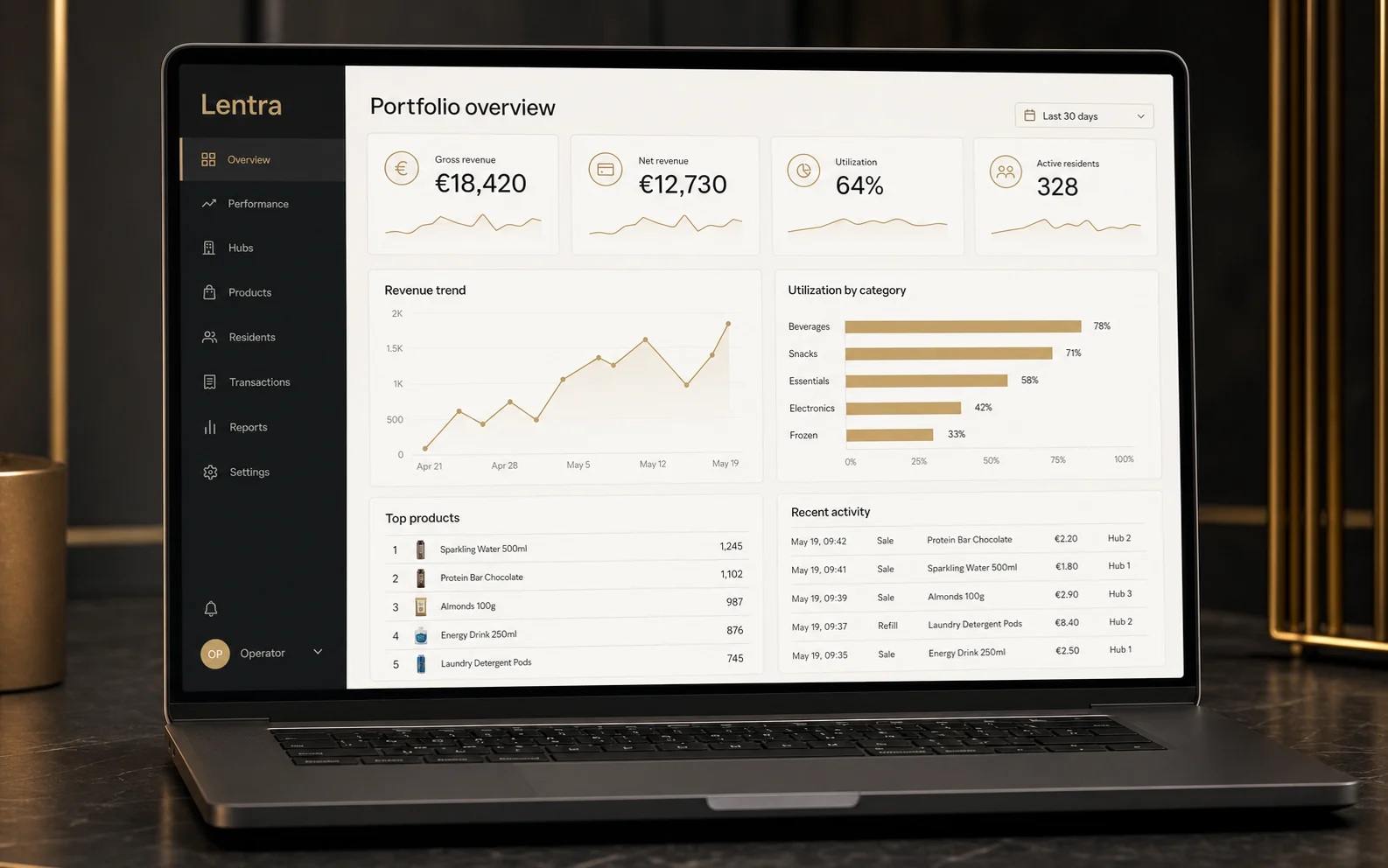
Track a small set of measures that match the business case: activated residents, repeat users, category-level demand, unavailable-item requests, support issues, direct income and staff time. Leasing or retention effects should be evaluated alongside other property changes, not automatically credited to one amenity.
Review performance in stages
Use an early launch review to fix onboarding and availability, then a later operating review to refine the catalog and commercial model. A low-use item may need better communication, a different location or replacement; it should not be left indefinitely because it appeared in the original plan.
Make the model auditable
A credible ROI model states its assumptions: building size, expected usage, responsibilities, inventory model and time horizon. Lentra can prepare a building-specific model so the team can test the assumptions instead of relying on a generic promise.